DanceStory is a year-long research project by dancers for dancers.

A chance to discover social dance treasures from Lindy Hop, Vernacular Solo Jazz, and Blues Dance history in the archives of New York City.

Connecting dance history to the dance floor

Connecting you with the rich history of swing and blues dance.

Sharing Discovery

By sharing research with the team, we can coordinate library trips, share research progress, and gather important discoveries that other swing and blues dancers should know about.

Supporting Research

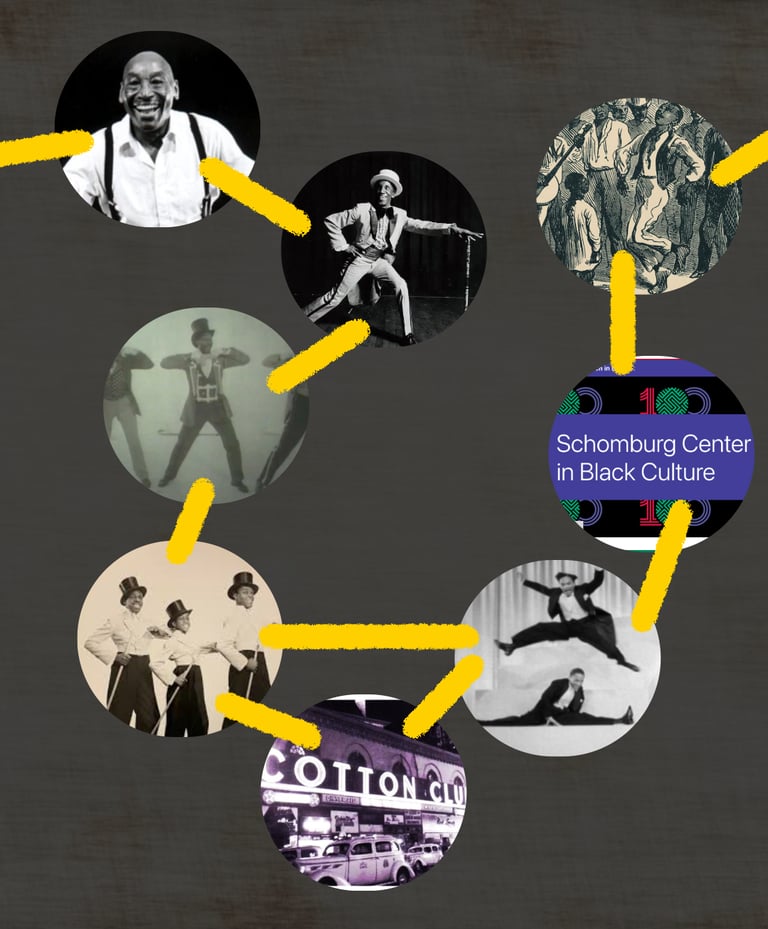
We'll be learning how to use the dance archives from the experts at the NYPL Library for the Performing Arts and The Schomburg Center for Research in Black Culture.

Leaving a Map

In Spring 2027, we'll map out all of our discoveries and resources in an online map for dancers.

Bringing It To Life

We'll meet quarterly in a dance studio to swap stories, celebrate discoveries, and dance it out together.

About the project

Who is DanceStory for?

DanceStory is research done by swing and blues dancers for dancers. If you want to learn more about where these dances came from, this is the place for you. If you want inspiration for your dancing, this is the place for you. If you teach other people how to do these dances, this is the place for you.

What are we looking for?

DanceStory is focused on finding original materials about social dance for Lindy Hop, Vernacular Solo Jazz, and Blues Dance. By emphasizing social dance, we are trying to go beyond performance to how and why people danced these dances in their everyday lives and understand the broader social context of the Black American culture that these dances came from.

What can we expect to find?

The NYPL is an incredible resource for film footage, interviews, photographs, researcher notes, newspaper articles, and more. Materials in archives may be fragile, original copies that few people have seen.

Finding any old dance clip isn't that hard. The real challenge is in finding social dancing instead of performance. Social dance was rarely filmed; moves and dance styles were not called by the same names from community to community or era to era; and we may need to look in collections that aren't even described as dance at all because of how social dance shows up in everyday life. This is where working as a team really helps us as we compare leads and notes and share successes and failures.

What is the time commitment?

We ask that you try to attend as many meetups as possible and commit to doing some research on your own between meetups. How much extra research you do is up to you. Please note that the libraries are mostly open during daytime hours on weekdays and limited Saturdays, so there are limited options to do research outside of those times.

We'll meet up on Saturdays every 2-3 months through February 2027:

  • 2 Saturday research sessions in June 2026 at the 2 libraries (pick one or attend both).

  • Then quarterly meetups in a dance studio to share our research and put it into practice.

How much does it cost to join?

It's free! Thanks to the support of the SW!NG OUT Community Fund, there is no cost to join the research team.

What do I need to do bring?

You'll need to have a NYPL library card and researcher account before our first meetup. Apply for a library card here.
If you don't live in New York State, NYPL will let you get a temporary card that will allow you to do research in the archives.

Bring a laptop or dedicated notebook to take notes.

You'll also need to join our Discord server, where we'll communicate between meetups and share research.

Who's running this show?

Jess Noble is a NYC swing and blues dancer who happens to also be a librarian. When she is not in the library or on the dance floor, you might find her teaching a blues dance class her in New York City-- More info at bluesmovement.com
What if I don't know anything about doing research?

Great! This is where you can learn. We're kicking things off with 2 research sessions with experts from the New York Public Library so we all start in the same place. Jess Noble, who is leading the project, is also a librarian and can help you if you get stuck.

Can I have a research buddy?

Yes! This whole project works by encouraging each other to discover and share things together. Being part of a group makes it easier to find a research buddy to go with you.

What if I don't live in New York City?

If you live in the NYC area, you are still welcome to join us. New York State residents can get a NYPL library card. Temporary research access is also available for non-New Yorkers, which you can find out more about through the NYPL.

What if I can't get to the archives in person?

There is a significant amount of archival content that has been digitized and available online. If you cannot get to the archives, but still want to be part of the project, we'll try to help you find some online leads to get started.

What about researching [insert another dance style]?

DanceStory is focused on finding original materials about social dance for Lindy Hop, Vernacular Solo Jazz, and Blues Dance styles. Where the resources that we find overlap with other styles or performances, we may make a note of that, but this is our focus.

That said, by helping us with this research, you might discover a thing or two (or ten) that helps make any dance research easier.

What about the collections at [insert another library/archive]?

Because NYPL's collections are open to the general public, we are working with those. That said, if you have access to other archives, such as those at NYU or Columbia University, that look promising for the scope of our work, please let us know, and we may still be able to include them in this project.

How do I see what the group has found?

You can join us and be in the know right away by mapping out these dance treasures with us, or you can wait until we share what we've found right here on this website-- but you'll have to wait until 2027. Your choice.

How will this research be used?

As the group maps out dance treasures in the archives, Jess Noble will collect them into an online resource right here on this website to make it easier for future dancers, instructors, and researchers to find them.

DanceStory is also partnering with the Ujima Blues Foundation Blues Research project to share sources for blues dance research beyond New York City.

Will the materials we find be published?

DanceStory respects the copyright requirements and other restrictions that may be in place on the materials we find. While we cannot publish the materials we find, we can make it easier for future dancers to find for them!

Join us

  • Dance history mapped out for dancers

  • Quarterly meetups

  • Free to participate

This project is made possible with support from the
SW!NG OUT Community Fund.

Learn more here: https://www.swingout.show/community-fund